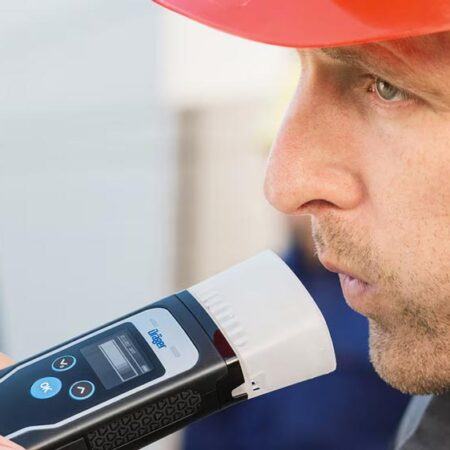

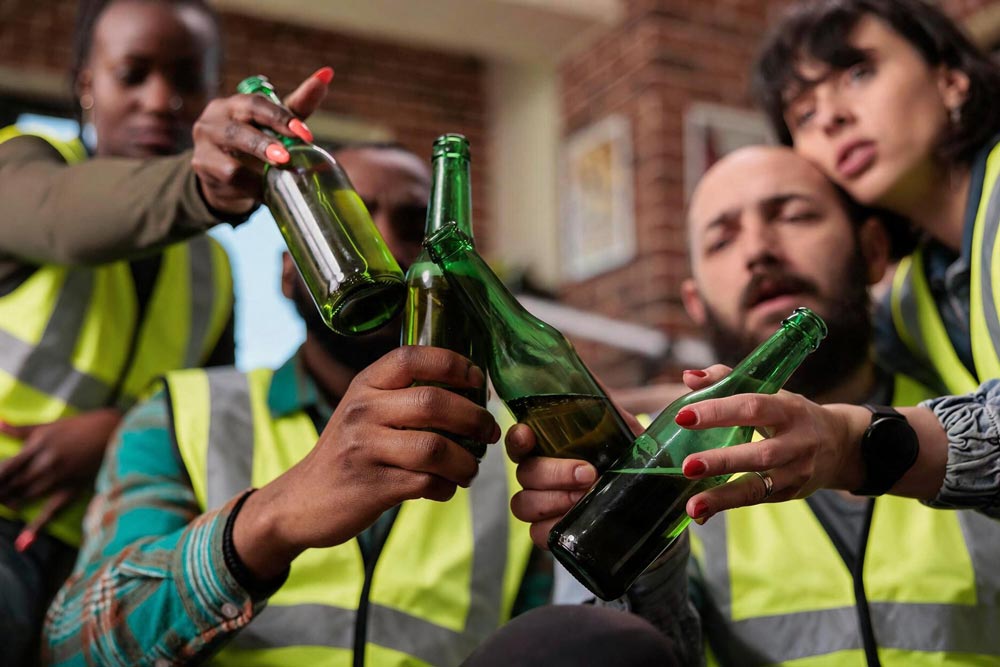
Illegal alcohol is making headlines across Victoria. Police, regulators and health experts are warning that illegal products are appearing in bottle shops, hospitality venues and private supply chains. This trend is a clear public health concern, but it also raises serious questions for Victorian workplaces where safety is a priority.
What’s the issue with illegal alcohol?
Illegal alcohol can contain ingredients you would never expect. It can also have much higher alcohol concentrations than regulated products.
As well as being a health risk, this creates real danger on the roads and in Victorian workplaces. A worker who believes they have had “just one drink” at lunch could return to work well over the limit and impaired.
For workplaces focused on safety, compliance and wellbeing, understanding the risks of illegal alcohol is now essential.
Illegal alcohol is becoming more common
Recent audits and investigations show illegal alcohol is circulating across Melbourne and regional Victoria. Illegal alcohol can enter the market in several ways:
- Products smuggled into Australia without tax or safety checks
- Alcohol produced by legitimate operators but diverted to avoid tax
- Alcohol made by unlicensed producers using unsafe methods
The third category is the most dangerous. Testing has found denaturants, contaminants and chemicals not intended for human consumption. These substances can cause severe illness, poisoning or unpredictable impairment.
As already highlighted, illegal alcohol also often contains far higher alcohol concentrations than the label suggests. This means a single drink can have the same effect as several standard drinks.
Why illegal alcohol is a workplace safety risk
Workplaces with safety‑critical roles—transport, construction, manufacturing, logistics, mining—are particularly exposed. But any workplace with a 0.00 or 0.05 alcohol limit faces risk.
Illegal alcohol creates several challenges:
- Unpredictable impairment. Workers may feel fine but be significantly impaired due to high alcohol content. A single drink could push a worker well over the limit.
- Increased incident risk. Impairment increases the likelihood of errors, accidents and near misses.
- Legal exposure. If an incident occurs, employers may face scrutiny over policies, supervision and testing.
This is where workplace alcohol testing in Victoria and strong policies become essential.
Legal alcohol can also be stronger than people think
While illegal alcohol is a major concern, legal alcohol can also catch people off guard.
Many workers assume one beer at lunch is safe. But not all beer is created equal.
- Standard full‑strength beer is around 8%.
- Many craft beers sit between 6% and 9%.
- Specialty styles—imperial stouts, double IPAs, Belgian ales—can reach 12% to 14% or more.
One pint of a 9% craft beer is equivalent to almost two standard drinks. A 14% specialty beer can be closer to three. In a workplace with a 0.05 limit, one pint at lunch can easily put a worker over the limit and make them unsafe in a safety‑sensitive environment.
Spirits create similar issues. A single 30ml nip of 40% spirits is already one standard drink. Many venues pour larger nips, and some spirits exceed 50% alcohol. It doesn’t take much for a worker to return impaired.
Understanding alcohol impairment is critical for both employees and employers.
How employers can respond
Victorian workplaces can take several practical steps to reduce risk:
- Strengthen alcohol and drug policies. Policies should clearly outline limits, expectations and consequences. They should also address emerging risks such as illegal alcohol.
- Educate employees. Staff should understand that both illegal and legal alcohol can contain higher alcohol concentrations than expected. Awareness reduces accidental impairment.
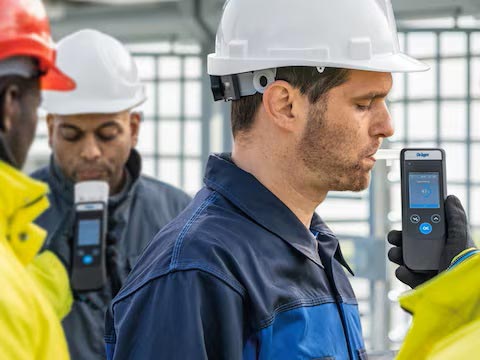
- Implement regular testing. Workplace alcohol testing in Victoria helps identify impairment early and prevents incidents. It also reinforces a culture of safety.
- Discourage lunchtime drinking. Clear guidance helps workers make safer choices. Many organisations now encourage alcohol‑free lunch breaks.
- Encourage reporting. Workers should feel comfortable reporting suspicious alcohol products or unsafe behaviour.
Conclusion
Illegal alcohol is a growing issue in Victoria. It can contain dangerous contaminants and much higher alcohol concentrations than regulated products. Even legal alcohol can be stronger than people expect, especially craft beers and spirits.
For workplaces, this creates real safety risks. A single drink at lunch can leave a worker impaired, over the limit and unsafe to return to duty.
Integrity Sampling can help Victorian organisations manage these risks through testing, education and strong policy development. Staying ahead of the issue is essential for safety and compliance.
For more information, contact Integrity Sampling Victoria.
FEATURED IMAGE CAPTION:
Illegal alcohol in Victoria is posing a health and safety risk and workplaces are not immune.
SECONDARY IMAGE CAPTION:
Conducting workplace alcohol testing in Victoria is one way to reduce the risks of illegal alcohol.