
A recent Fair Work Commission case has highlighted a problem that many workplace leaders don’t know or don’t understand. When using urine for workplace drug testing, a sample can be tampered with. And when it is, the organisation faces uncertainty, disputes and questions about defensibility.
As reported on the HR Leader website, the case involved a FIFO (fly‑in fly‑out) worker who submitted a urine sample that was “fridge cold”. Thankfully, the tester was on the ball and noticed the sample was outside the acceptable temperature range. As noted by the tester in the article, “It is impossible for a fluid to come out of the body outside of that range without the individual being severely sick or dead.”
When subsequent testing showed the worker had THC in his system, he was dismissed for the positive result and for the earlier tampering. The worker argued that the chain of custody was corrupted and decided to challenge the testing process in the Fair Work Commission (FWC).
Ultimately, the case wasn’t heard. The worker discontinued his unfair dismissal application only minutes before the scheduled hearing.
Urine sample tampering is a real workplace risk
While the case wasn’t heard, the facts remain important for every organisation that relies on urine testing as part of its workplace drug testing program.
It shows how easily urine samples can be manipulated. And while the tampering was picked up in this instance, it’s likely that in some cases tampering efforts are successful. While this, in itself, is important, the main issue is that this means people who may be unsafe to be at work are allowed to continue to put themselves and others at risk.
So, what’s the solution? For Integrity Sampling, this is one of the reasons why saliva drug testing is a preferred method of workplace drug testing.
Urine testing has been used for decades. But it has a weakness that cannot be ignored. A urine sample can be:
- substituted
- diluted
- adulterated
- temperature‑manipulated
- contaminated
- stored and reused
Even when the organisation follows correct procedure, urine testing still leaves room for manipulation.
Saliva drug testing removes the opportunity for tampering
Saliva drug testing eliminates these risks because the sample is collected under direct observation. The worker cannot:
- substitute the sample
- alter the temperature
- add chemicals
- dilute the sample
- hide contamination
The sample is taken in real time, in front of the collector, with no opportunity for interference. This makes saliva testing the most secure and tamper‑proof method available.
Saliva testing also provides:
- fast collection
- fast results
- strong chain‑of‑custody integrity
- minimal privacy concerns
- no need for bathroom facilities
- reduced operational disruption
But perhaps the major advantage of saliva drug testing is that it shows whether a person is likely to be under the influence at the time of testing. Urine testing has long detection windows, so it is better seen as an indicator of past drug use, not current impairment.
For safety‑critical industries, these advantages matter.
Why saliva drug testing strengthens defensibility
When an incident occurs, investigators look closely at the organisation’s drug and alcohol testing programs. They want to know whether the system is:
- consistent
- reliable
- defensible
- aligned with operational reality
Saliva drug testing supports defensibility because:
- the sample cannot be tampered with
- the collection process is transparent
- the chain of custody is clear
- the evidence is strong
- disputes are rare
In contrast, urine testing can create uncertainty. If a worker disputes the sample, the organisation must spend time and resources proving the process was correct. This can weaken the organisation’s position during investigations or legal proceedings.
In the FWC case highlighted above, the employer had to prepare for the hearing — and no doubt incur significant legal and other expenses — even though the case didn’t go ahead. The employer applied for costs to be paid by the worker, but this was rejected by the judge.
Why Australian workplaces are shifting to saliva drug testing
Across mining, transport, manufacturing, construction and logistics, organisations are moving away from urine testing. They want:
- stronger defensibility
- reduced disputes
- faster testing
- better worker acceptance
- improved operational efficiency
- tamper‑proof collection
Saliva drug testing delivers all these benefits.
For organisations that rely on fit‑for‑work testing, saliva testing is now the most practical and reliable method.
The Integrity Sampling perspective
Integrity Sampling recommends saliva drug testing for most workplace environments. It is:
- virtually impossible to tamper with
- easy to administer
- fast to process
- defensible under scrutiny
- aligned with modern WHS expectations
- a better indicator of whether a person is under the influence
Urine testing still has a place in some contexts, but saliva testing is the best option for organisations that want certainty, consistency and confidence.
The Fair Work case is a reminder that testing methods matter. A strong safety system depends on reliable evidence. And reliable evidence starts with a sample that cannot be tampered with.
FEATURED IMAGE CAPTION:
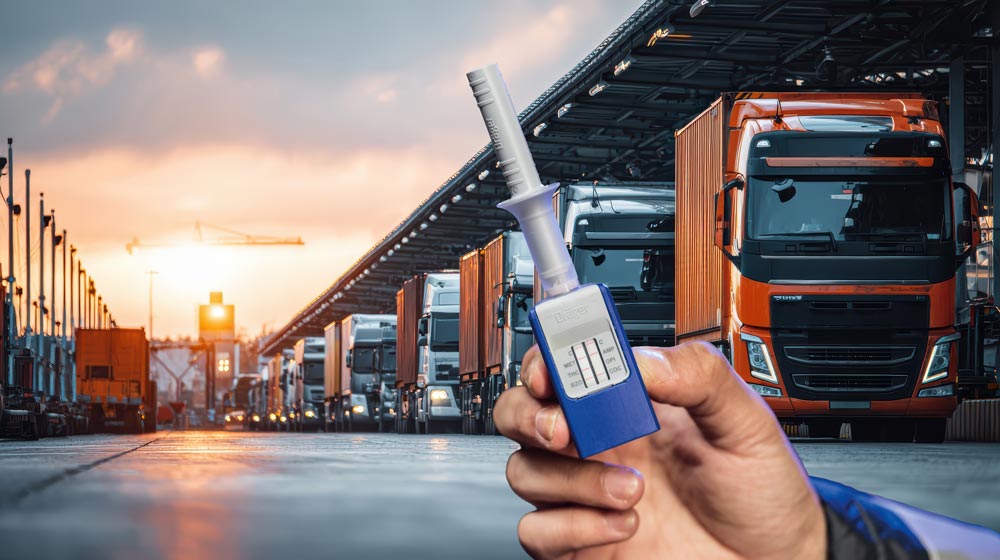
Saliva drug testing is carried out in an Australian transportation workplace.