

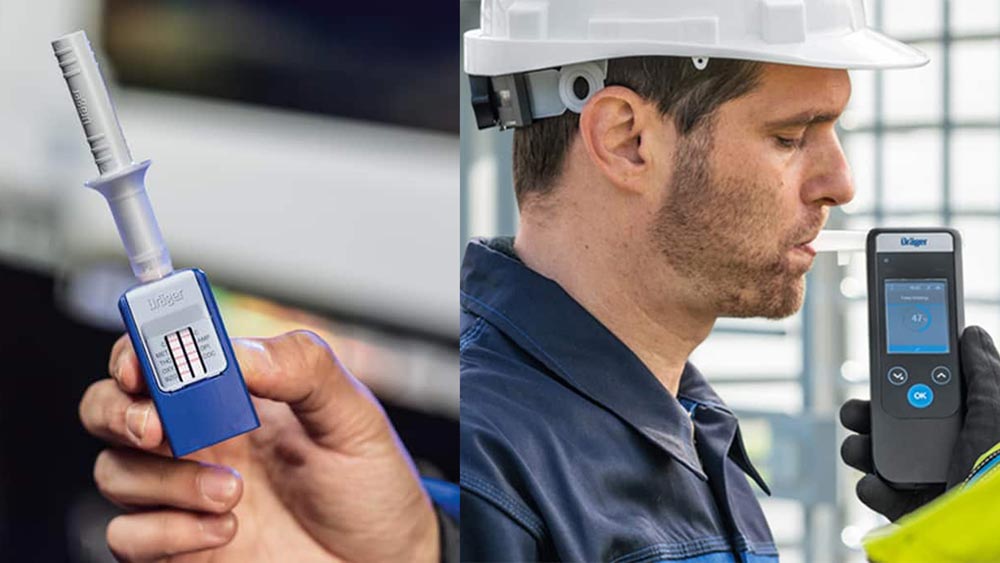
You are the Health and Safety Manager at a busy manufacturing plant. You feel confident your drug and alcohol testing programs are in good shape. Your policy is detailed and updated every year. You run regular awareness sessions on drugs and alcohol. You conduct random testing, under‑suspicion testing and post‑incident testing. Every compliance activity is completed. Every box is ticked.
Or at least, it looks that way.
But when you step back, a question sits quietly in the background. Would your testing program hold up under pressure if something serious happened tomorrow?
Many organisations believe their systems are strong because the paperwork is complete and the activities are scheduled. Yet experienced WHS leaders know that compliance activity does not always equal operational consistency. And when an incident occurs, investigators look past the forms and policies. They look at real‑world implementation.
That is where the true strength of drug and alcohol testing programs is revealed.
Why compliance alone doesn’t create defensible testing programs
Compliance matters. It is the foundation of every workplace safety system. But compliance alone does not guarantee risk reduction or defensible outcomes.
Many organisations complete the required activities but still face challenges such as:
- Inconsistent testing across teams or sites
- Gaps between policy and operational reality
- Limited evidence of behaviour change
- Supervisors unsure how to respond to concerns
- Documentation that does not reflect real practice
These issues are not about poor intent. They are about the natural complexity of operational environments. When pressure increases, people rely on habits, confidence and clarity — not paperwork.
This is why workplace compliance must evolve into operational safety consistency.
Note: For national guidance on managing drug and alcohol risks, Safe Work Australia provides clear expectations for PCBUs and workers.
What investigators look for after a serious incident
When an incident occurs, the focus shifts from documentation to defensibility. Investigators want to understand whether the organisation can demonstrate:
- Clear and consistent implementation
- Supervisor capability and confidence
- Evidence that workers understood expectations
- Records that reflect real‑world practice
- Alignment between policy and operational behaviour
- A fit-for-work system applied reliably
A completed checklist does not always mean risk was reduced. A signed form does not always mean a behaviour changed. And a policy does not always mean a system was embedded.
This is why WHS incident defensibility is now a critical leadership focus.
Drug and alcohol testing programs under pressure
Drug and alcohol testing programs often look strong on paper. They include:
But the real test is how these programs perform under operational pressure.
Many organisations struggle with:
- Inconsistent testing practices
- Unclear supervisor responses
- Limited follow‑through after incidents
- Documentation gaps
- Policies that do not match day‑to‑day reality
These challenges weaken safety system implementation and reduce defensibility.
Ticking the box vs embedding operational consistency
Activities are easy to complete. Embedding behaviours is harder.
Strong drug and alcohol testing programs must:
- Reinforce fit-for-work requirements
- Build supervisor capability
- Support early intervention
- Maintain clear evidence
- Align policy with operational reality
- Deliver consistent testing across sites
When these elements work together, testing becomes a proactive safety tool rather than a reactive compliance activity.
Safety systems often fail quietly before they fail publicly
Most safety systems do not collapse suddenly. They weaken through small inconsistencies:
- A conversation that does not happen
- A test that is delayed
- A behaviour that goes unchallenged
- A record that is incomplete
- A procedure that is interpreted differently
Individually, these moments seem minor. Together, they create vulnerability. And when an incident occurs, those small gaps become major questions.
This is why defensibility must be built before an incident, not after.
A more useful question for leaders
Don’t ask “Are we compliant?” A stronger question is: “Would our drug and alcohol testing program hold up under scrutiny if something serious happened tomorrow?”
This question shifts thinking from activity completion to operational consistency. It encourages leaders to examine whether their systems work under pressure, not just on paper.
The Integrity Sampling perspective
Across Australian workplaces, we see organisations working hard to meet their obligations. Most teams genuinely want to do the right thing. The challenge is not intent — it is consistency.
The strongest drug and alcohol testing programs that we see are those that:
- Align policy with operational reality
- Build supervisor capability
- Reinforce behaviours, not just procedures
- Use testing as part of a broader fit-for-work strategy
- Maintain clear evidence and defensibility
- Focus on implementation quality, not just compliance activity
Ticking the box is a starting point. Embedding safety is the goal. Defensibility is the outcome.
FEATURED IMAGE CAPTION:
Drug and alcohol testing programs are conducted in Australian workplaces. Would your testing program hold up under pressure if something serious happened tomorrow?