

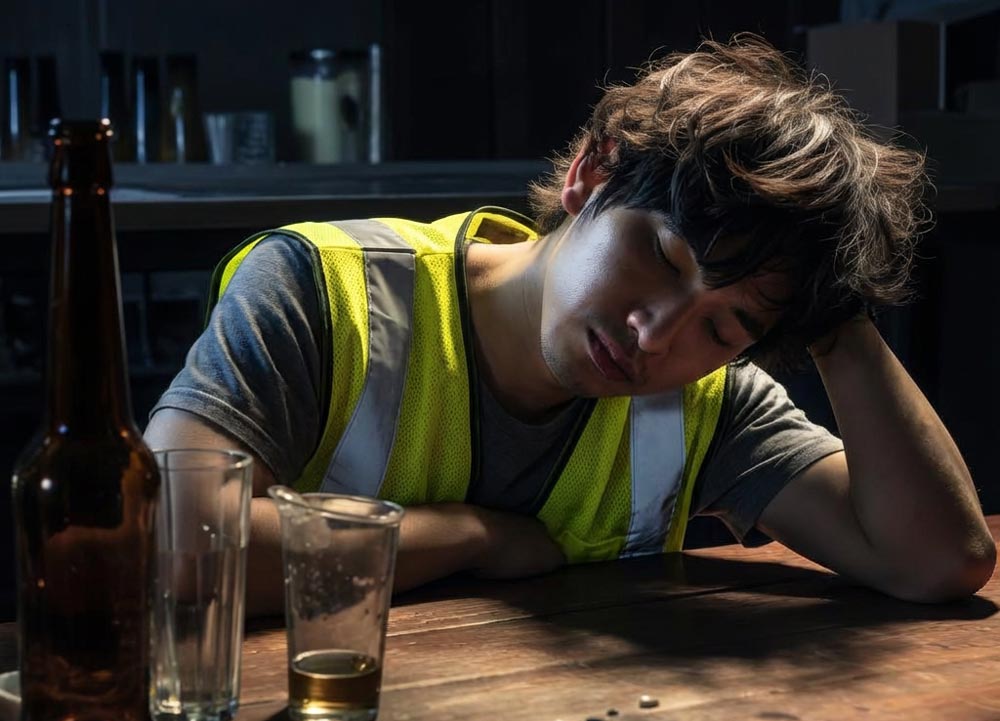
We all know that alcohol can change how people think, react and behave. But what we sometimes forget, is that in some cases, it can lead to poor decisions and tragedy.
A recent case in Tasmania highlights just how dangerous impaired judgement can be. It also serves as a wakeup call for workplaces and the need for alcohol testing.
A tragic example of impaired judgement
As highlighted on the Pulse Tasmania website, in 2024 a man lost his life on Flinders Island, off the northwest coast of Tasmania, after being struck by a police vehicle on a dark, unlit road.
Earlier that day, he had been at a local tavern celebrating a birthday. CCTV footage later showed he consumed 18 beers before leaving alone on foot.
He was seen running along the road in dark clothing. Visibility was extremely low. Another driver had already narrowly avoided hitting him and urged him to get into her car. He refused.
Moments later, a police officer travelling at around 100km/h encountered him. Investigators found the driver had just 0.59 seconds to react—far less than the average reaction time of around three seconds.
Despite swerving, the collision could not be avoided.
The coroner, in findings handed down recently, stated that the man’s level of intoxication had impaired his judgement and contributed to him placing himself in a highly dangerous situation.
Why alcohol leads to risky decisions
This incident is confronting. But it also shows a clear pattern.
Alcohol affects:
- Decision-making
- Risk awareness
- Reaction time
- Confidence and impulsivity
When people drink heavily, they are more likely to take risks they would normally avoid. They may ignore obvious dangers. They may also reject help, even when it is offered.
In this case, the decision to walk and run along a dark road, combined with refusing a safe lift, proved fatal.
The Tasmanian workplace parallel
While this incident did not occur at work, the lessons are directly relevant. In a workplace, a person under the influence of alcohol can:
- Misjudge risks
- Ignore safety procedures
- Operate equipment unsafely
- Put themselves and others in danger
Unlike social settings, workplaces often involve vehicles, machinery, heights, and other hazards. The consequences of poor judgement can escalate quickly. Even a small lapse in judgement can lead to serious injury—or worse.
Building a safer workplace in Tasmania with alcohol testing
Managing alcohol risk in the workplace does not have to be complicated. It starts with clear policies, education, and consistent alcohol testing where appropriate.
Businesses should:
- Develop a clear drug and alcohol policy
- Educate employees about risks and expectations
- Implement workplace alcohol testing where safety is critical
- Encourage a culture of accountability and support
When these measures are in place, the risk of impaired decision-making in the workplace is significantly reduced.
Don’t wait for an incident
The events on Flinders Island are a stark reminder of how quickly things can go wrong when alcohol impairs judgement. In the workplace, the stakes can be just as high.
If you’re a business owner or manager in Tasmania and want to improve your safety and reduce the risk around drugs and alcohol, now is the time to act. Don’t wait for an incident to occur.
Contact Integrity Sampling in Tasmania and let us help you safeguard your workplace, your people, and your reputation.
FEATURED IMAGE CAPTION:
Alcohol can change how people think, react and behave. Which can be fine in a safe setting, but on the roads and in Tasmanian workplaces it can be tragic.