

“Medicinal cannabis is legal. Cannabis is legal for personal use in the ACT. There’s talk of legalising it elsewhere. Why are we still testing for it?”
It is a question we hear a lot. It comes up in meetings with clients. It comes up in drug and alcohol education sessions. It comes up during workplace drug testing.
So why does workplace drug testing still include cannabis? Why does THC, the psychoactive ingredient in cannabis, remain on the testing panel?
The short answer is simple. Legal does not mean safe. Legal does not mean fit for work. When safety matters, biology matters.
Legal status does not remove safety risk
In Australia, medicinal cannabis can be prescribed under the Therapeutic Goods Administration’s Special Access Scheme. That makes access legal under medical supervision.
However, it does not remove the potential for impairment.
We must separate two issues:
- Legal access
- Safety risk in the workplace
Workplaces, especially safety-sensitive and safety-critical environments, must manage risk. Employers have a legal duty of care to do so. They must provide a safe system of work. That duty does not change because a substance is prescribed or legal.
In this way, cannabis can be compared to alcohol. Alcohol is legal and widely consumed. But we know the risks and most people do the right thing on the roads and in workplaces after they’ve consumed alcohol.
A Canadian medical review officer explains why testing continues
This issue was addressed in a recent LinkedIn post by Canadian Medical Review Officer (MRO) Dr Melissa Snider-Adler.
In Canada, cannabis has been legal for recreational use since 2018. Yet workplace drug testing programs still test for THC.
The MRO posed a simple question:
“Cannabis is legal. Why are we still testing for it?”
She then answered it directly:
“Because legalization doesn’t change biology and it does not change safety.”
That statement goes to the heart of workplace drug testing.
The post explained that THC is fat-soluble. It is stored in fat tissue, including the brain, and released over time. This is different to alcohol, which is water-soluble and clears the body in a more predictable way.
The MRO wrote:
“Both (alcohol and cannabis) are legal. Both can lead to significant safety concerns for those working in safety-sensitive workplaces.”
The post highlighted the specific functions affected by both alcohol and THC:
- Reaction time
- Attention
- Judgment
- Coordination
- Executive functioning
In safety-sensitive roles, those functions matter. A small delay in reaction time can cause a serious incident. Poor judgment can lead to catastrophic outcomes.
The MRO also warned about the message employers who don’t test for THC send to employees and others. That is that THC is safe, when in a safety-sensitive workplace it isn’t.
She concluded with a powerful reminder:
“As laws evolve, policies must be clear, role-specific, and grounded in safety, not assumptions or social norms. Stay informed as the landscape shifts.”
That advice applies directly to Australian workplaces managing medicinal cannabis risk.
Medicinal cannabis and workplace drug testing in Australia
In Australia, prescribed medicinal cannabis often contains THC. THC is the psychoactive component responsible for impairment.
Some products contain only CBD, another component in cannabis. CBD is not intoxicating. However, many prescribed products contain both CBD and THC, or THC alone.
Employees sometimes believe that if a doctor prescribes medicinal cannabis, they can work without restriction. That is not always the case.
A prescription confirms medical oversight. It does not confirm fitness for safety-sensitive work. As we highlighted earlier, under Australian workplace health and safety laws, employers must assess risk. If a role involves driving, operating machinery, working at heights or making high-level decisions, impairment matters.
That is why workplace drug testing programs still include cannabis. The goal is not to punish. The goal is to manage risks and prevent harm.
What NDARC research tells us about prescribed cannabis and driving
In Australia, individuals taking medicinal cannabis containing THC are advised—and in most states, legally required—to exercise extreme caution regarding driving and working in safety-sensitive roles. But do they?
Recent research from the National Drug and Alcohol Research Centre (NDARC) at the University of New South Wales provides some insight.
The 2025 NDARC study examined prescribed cannabis and driving behaviours among two samples of people. The sample size was relatively small. The participants were also regular drug users at the time of the research. That is important to note and obviously impacts the research.
However, the study still offers useful insight into the behaviour of people prescribed THC-containing cannabis products.
Key points from the research include:
- Some participants reported driving after using prescribed THC products.
- There was confusion among some respondents about legal limits and impairment.
- A portion of participants believed prescribed status reduced risk or legal consequences.
- Risk perception did not always match actual impairment risk.
The research suggests that prescription status may influence how people think about risk. Some may assume that because a doctor prescribed the product, driving or performing other tasks is acceptable.
This highlights an important issue for employers. Because, what happens on the road and in society in general, does not stop at workplace gates.
If someone is willing to take risks while driving under the influence of THC, they may also take risks at work. Driving is a safety-sensitive task. So is operating plant, lifting loads, driving a truck, flying an airplane, or making high-stakes decisions.
Even though the NDARC sample was small and involved people who use illicit drugs, it still shows how risk perception can shift when cannabis is prescribed.
That shift in perception can create workplace risk if not managed properly.
Why workplace drug testing still matters
Workplace drug testing is not about judging legal behaviour. It is about managing impairment risk.
The key questions for employers are:
- Is the worker fit for duty?
- Is there a risk of impairment?
- Could that impairment harm the worker or others?
In safety-sensitive workplaces, the margin for error is small. A moment of inattention can cause injury or death.
THC can impair:
- Reaction time
- Decision-making
- Motor coordination
- Situational awareness
These are the core functions identified by the Canadian MRO.
Even if cannabis becomes more widely legalised in Australia, those biological effects will not change.
Policies must be clear, fair and role-specific
As laws evolve, workplace policies must evolve too. But they must remain grounded in safety.
Best practice includes:
- Clear drug and alcohol policies
- Role-specific risk assessments
- Education on medicinal cannabis and impairment
- Disclosure processes for prescribed medication
- Access to Medical Review Officer oversight
Employers should communicate one simple message. Legal access does not equal safe performance in safety-sensitive roles.
Employees who use prescribed medicinal cannabis should be encouraged to disclose their medication confidentially. This allows proper assessment and support.
Open conversation reduces stigma. It also reduces risk.
The bottom line for Australian workplaces
The debate around cannabis legalisation will continue. Social norms will shift. Laws may change.
But biology does not change.
THC can impair safety-critical functions. That fact sits at the centre of workplace drug testing programs.
At Integrity Sampling, we support employers with clear policies, robust workplace drug testing programs and education, including education around medicinal cannabis. Our focus is simple. Keep people safe.
Because at the end of the day, safety is not about politics or popularity. It is about protecting lives.
FEATURED IMAGE CAPTION:
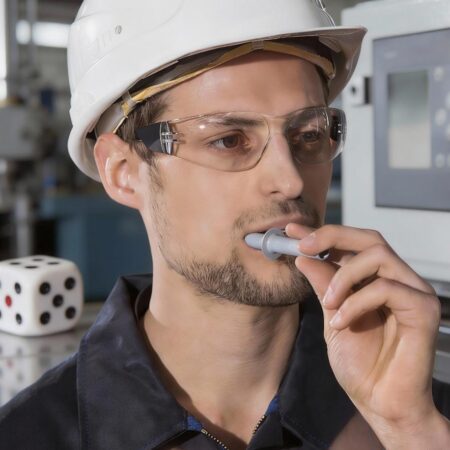
Workplace drug testing for cannabis, as well as other drugs, is carried out in a safety-sensitive Australian workplace.