

You've had a few drinks with friends or perhaps used drugs at a social gathering. Despite knowing better, you get behind the wheel to head home.
A few minutes later, you see the flashing blue and red lights in your rear-view mirror. A police officer approaches your vehicle and asks you to undergo roadside testing.
Suddenly, a question pops into your head: "Should I refuse to take the test?"
It's a question that some drivers ask themselves when they believe they may return a positive result. However, refusing a drug test in NSW is rarely the smart option many people think it is. In fact, refusing a roadside drug test can expose drivers to significant penalties, including fines, lengthy licence disqualifications and, in some circumstances, imprisonment.
Recent events in Sydney have highlighted the risks associated with refusing lawful testing requests. They also serve as a reminder that, whether you're on the road or in the workplace, refusing a test can sometimes create even bigger problems than cooperating with the testing process.
Refusing a drug test in NSW is not a loophole
NSW Police have extensive powers to conduct roadside drug testing across the state. Drivers may be required to provide an oral fluid sample during random roadside testing, after a traffic stop or following a motor vehicle incident.
Some drivers incorrectly assume that refusing a test may help them avoid detection. However, NSW legislation specifically addresses this situation.
Refusing a roadside test, failing to provide a required sample, or refusing further testing after arrest can all result in serious penalties. As a result, drivers can face significant legal consequences even if no actual drug result is obtained.
For this reason, refusing a drug test in NSW should never be viewed as a way to avoid penalties.
Sydney incident highlights the risks
Earlier this year, a Sydney man was charged after a series of crashes in the city's west allegedly ended with his vehicle engulfed in flames.
According to media reports, the incident began after a collision in Wetherill Park before the driver allegedly became involved in additional crashes nearby. The vehicle eventually caught fire, and witnesses assisted in removing the driver from the burning SUV before emergency services arrived.
NSW Police subsequently alleged the driver refused roadside breath testing and later refused a breath analysis after arrest. He was charged with several offences, including the testing-related offences.
While the matter remains before the courts, the case demonstrates an important point: refusing a lawful testing request can quickly add to an already serious situation.
What are the penalties for refusing a drug test in NSW?
The penalties depend on the type of test requested and the circumstances surrounding the incident.
Refusing a roadside oral fluid test
A person who refuses a roadside oral fluid or sobriety test may face:
- A maximum fine of up to $1,100.
- Licence disqualification at the court's discretion.
Refusing a sample after arrest
The consequences become significantly more severe when a driver refuses to provide an oral fluid sample, blood sample or another required specimen after arrest.
Potential penalties include:
- A maximum fine of up to $3,300.
- An automatic licence disqualification period of three years.
- A minimum disqualification period of six months.
- Imprisonment in certain circumstances.
NSW roadside drug testing continues to expand
Drug driving remains a major enforcement priority for NSW Police.
In recent years, NSW introduced changes that allow police to obtain a secondary oral fluid sample at the roadside rather than transporting drivers to a police station. The change has streamlined the testing process and allows officers to spend more time conducting roadside enforcement activities.
As a result, the likelihood of detection has increased.
Roadside testing operations are regularly conducted throughout metropolitan Sydney, regional NSW and rural communities. Testing can occur at any time of the day or night and often forms part of large-scale road safety operations.
For drivers, the message is clear. The chances of being selected for roadside drug testing are higher than many people think.
Refusing a drug test at work can also have consequences
The principle behind refusing a drug test in NSW can also apply in many workplaces.
Unlike roadside drug testing, workplace testing is generally governed by company policies, employment contracts, enterprise agreements and workplace health and safety procedures rather than road transport legislation.
Employers operating in safety-sensitive industries such as construction, transport, manufacturing, mining and logistics have a legal obligation to provide a safe workplace. To help meet that obligation, many organisations require employees and contractors to participate in workplace drug and alcohol testing programs.
If an employee refuses to participate in testing required under a workplace policy, the employer may treat the refusal as a breach of that policy. Importantly, the policy should clearly explain how testing refusals are managed and the potential consequences of non-compliance. If the policy does not adequately address refusals, it can create uncertainty and increase the risk of disputes.
Depending on the circumstances, the consequences may include:
- A formal investigation.
- Removal from site or safety-sensitive duties.
- Disciplinary action.
- Termination of employment.
Every workplace policy is different. However, refusing a test is rarely viewed more favourably than cooperating with the testing process, even when a worker is concerned about the outcome.
Refusing a drug test in NSW is not a way out
In summary, refusing a drug test in NSW is rarely an effective way of avoiding the consequences of drug driving. In many situations, a refusal can trigger severe penalties, including substantial fines, lengthy licence disqualification periods and even imprisonment.
The Sydney case outlined above serves as another reminder that testing-related offences are taken seriously by NSW authorities.
The same principle may also apply in many workplaces. While the consequences can vary depending on an organisation's drug and alcohol policy, refusing to participate in workplace testing can create significant employment and disciplinary issues.
Whether on the road or at work, refusing a lawful drug or alcohol test can create consequences that are often more significant than people expect.
Note: If you need help with workplace drug testing in NSW, contact our NSW branch.
FEATURED IMAGE CAPTION:
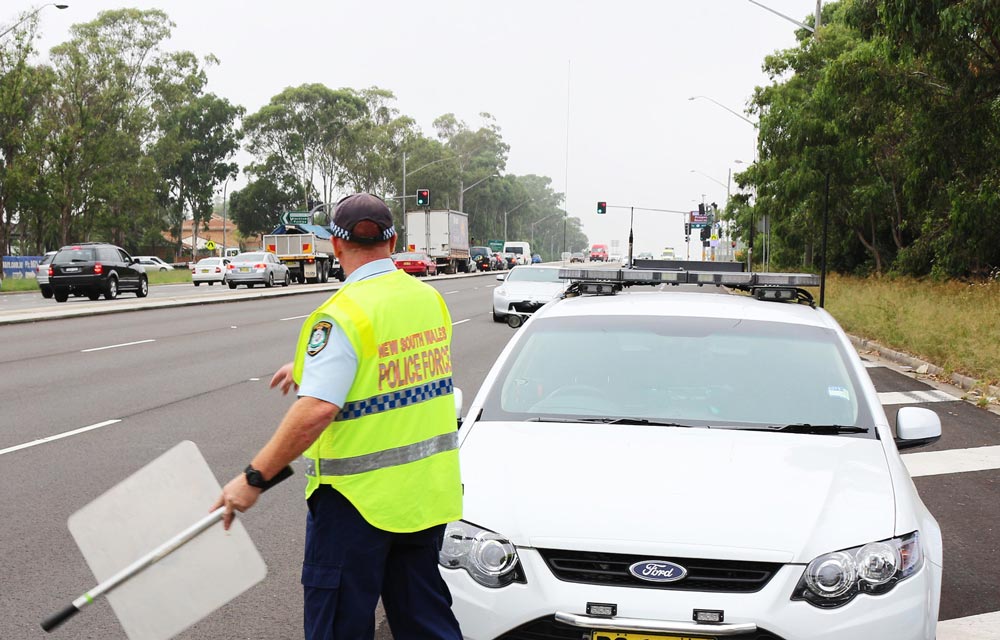
Police conduct roadside drug testing on a highway in NSW.