
Onsite drug and alcohol testing is one of the simplest ways for workplaces to keep people safe. It’s quick, it’s practical and it happens where the work happens. But many employers still aren’t sure what onsite testing actually involves. They imagine a complicated process, long delays or awkward interactions.
In reality, onsite testing is straightforward. It’s designed to be fast, respectful and easy to understand. When testers come to your workplace, the process is clear from start to finish — and workers can get back to their day within minutes.
This blog explains what onsite testing looks like, how drug and alcohol tests are carried out, and the different types of testing used in Australian workplaces.
Why workplaces choose onsite testing
Some workplaces still send employees to external medical clinics, third‑party collection centres or specialised testing locations for drug and alcohol testing. However, Integrity Sampling believes onsite testing is a far better option — and the difference is obvious once you compare the two.
- Less travel, less downtime. When workers are sent offsite, they may be away from the workplace for 30 minutes, an hour or even longer depending on travel time, clinic queues and paperwork. This interrupts operations and increases downtime. Onsite testing removes all of this. Workers stay at the workplace, testing takes only a few minutes, and normal duties resume straight away.
- Minimal disruption to operations. Offsite testing often requires transport arrangements, coordination and scheduling around clinic availability. It can also create bottlenecks if multiple workers need testing at once. Onsite testing fits naturally into the workday. Testers come to you, testing happens quickly, and there’s no need to reorganise tasks or shift rosters.
- Results are available immediately. One of the biggest differences between onsite and offsite testing is timing. With offsite testing, results may not be known until 30 minutes or more after the worker has left the workplace. During that time, any alcohol or drugs in the system may reduce, making the result less accurate. Onsite testing avoids this problem. Results are available within minutes. This gives workplaces clear information straight away and removes the risk of delayed results.
- A smoother experience for workers. Travelling to a clinic can feel stressful or uncomfortable for some workers. Onsite testing is familiar, quick and private. It becomes a normal part of workplace practice rather than a separate, unfamiliar event.
What onsite drug testing actually involves
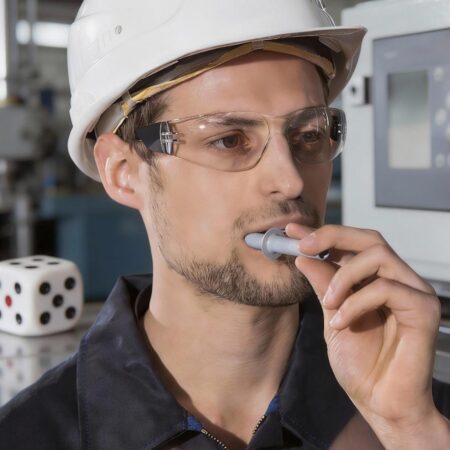
Drug testing onsite is fast and simple. Integrity Sampling uses the DrugCheck 3000, a reliable oral‑fluid testing device designed for workplace use. The process usually takes around 2–3 minutes per person.
Here’s what happens:
- The person being tested uses the collection device by rubbing it inside their mouth — under the tongue and around the cheeks. This collects a small oral‑fluid sample.
- Insert the device. The collection device is placed into the test kit.
- Shake the kit. The tester shakes the kit to activate the testing process.
- Secure and press. A security tab is removed and the sampler is pushed fully into the test kit.
- Wait for results. Within a few minutes, the test kit displays the result.
It’s simple, straightforward and there’s no discomfort. Workers can return to duties immediately if their result is negative.
This simplicity is one of the reasons oral‑fluid testing is widely used in transport, construction, manufacturing, mining and other safety‑sensitive industries.
What onsite alcohol testing involves
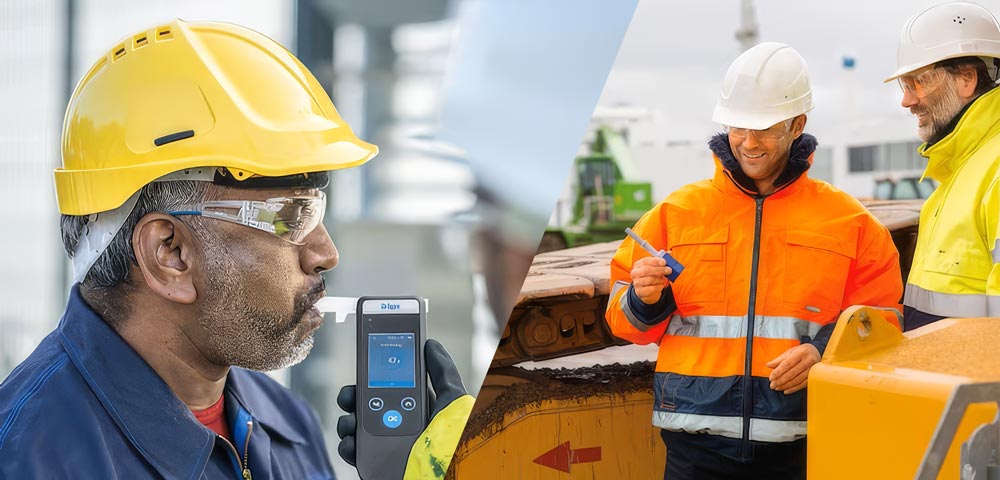
Alcohol testing onsite is just as quick. It works the same way as roadside alcohol testing.
- A clean mouthpiece is inserted into the breathalyser.
- The person being tested blows into the mouthpiece.
- The breathalyser displays their breath alcohol concentration (BrAC).
- The mouthpiece is replaced and the next person is tested.
The entire process takes less than a minute. Breath testing is familiar to most workers, which helps reduce anxiety and keeps the process smooth.
The three main types of onsite testing
Workplaces use onsite testing for different reasons. The three most common types are random testing, post‑incident testing and under‑suspicion testing.
- Random testing
Random testing involves testing a random selection of workers at unpredictable times. It helps reinforce expectations, supports a safer workplace culture and reduces the likelihood of workers taking risks. Random testing is not about catching people out — it’s about consistency. Everyone understands that testing can occur at any time, which encourages safer choices.
- Post‑incident testing
If an incident occurs — even a minor one — post‑incident testing helps workplaces understand whether drugs or alcohol may have played a role. It’s a standard part of incident response in many industries. Post‑incident testing is not about blame. It’s about gathering clear information so the workplace can respond appropriately and prevent future incidents.
- Under‑suspicion testing
Under‑suspicion testing is used when there is a genuine concern about a worker’s fitness for duty. This might be based on behaviour, appearance or other observable factors. The process is simple: testing is carried out onsite, results are available quickly, and the workplace follows its policy from there. Under‑suspicion testing helps workplaces act early and fairly when something doesn’t look right.
What happens after a non‑negative result
If a worker returns a non‑negative result, the process remains clear and consistent.
- For alcohol testing: A confirmation test is conducted a short time later. If the breath alcohol concentration remains above the workplace’s mandated limit, the test is considered positive.
- For drug testing: Another saliva sample is collected following a non‑negative test. This sample is sent to an independent laboratory for more sensitive and accurate analysis. A test is not considered positive until the laboratory results have been determined.
- The worker is taken to a safe place.
- Once confirmation testing is complete and the results are known, the workplace follows its policy.
Why clarity matters
Onsite testing works best when everyone understands the process. Workers know what will happen. Employers know what to expect. And testers follow the same steps every time. Clear processes reduce confusion, support fairness and help workplaces respond confidently when testing is required.
Onsite testing isn’t complicated — and it doesn’t need to be. When done well, it’s simply part of how workplaces protect people and keep operations running smoothly.
FEATURED IMAGE CAPTION:
Onsite drug and alcohol testing is conducted on Australian work sites.