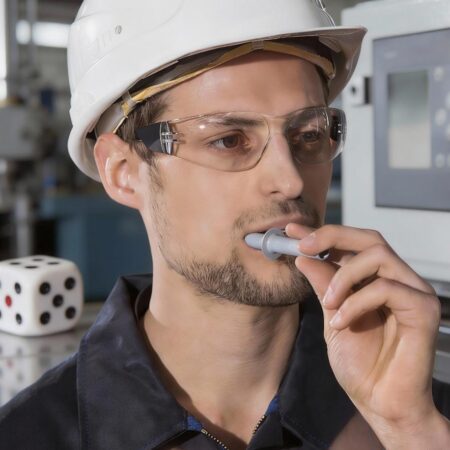


Should Tasmania’s elected officials undergo drug and alcohol testing?
That’s the question Waratah–Wynyard Deputy Mayor Celisa Edwards is posing. She has asked council staff to investigate introducing testing for the council’s elected officials.
The proposal aims to align councillor behaviour with the safety standards already applied to council employees at Waratah–Wynyard. Her reasoning is simple: because councillors make decisions that affect staff, communities and budgets, implementing drug and alcohol testing makes sense.
While many Tasmanians may agree and vote a resounding yes to this proposal, there is more to consider than first meets the eye.
What is the proposal?
Deputy Mayor Edwards’ motion is straightforward. Councillors should meet the same safety expectations as the people they oversee. For example, council staff can already be subject to drug and alcohol testing under workplace policies. These policies exist because impairment can affect judgement, reaction time and risk awareness.
However, elected members are not covered by the same rules, even though they attend worksites, participate in briefings and make decisions that affect the entire council and region.
This inconsistency is central to the debate. It raises a practical question: if safety matters for staff, why wouldn’t it matter for elected officials?
To explore options, Waratah–Wynyard Council reviewed the Rockhampton Regional Council policy. Rockhampton’s approach includes random testing and reasonable‑suspicion testing. It is designed to support safety, not punish people. Because it is already in place, it provides a clear example of how a council can manage testing in a structured and fair way.
Many Tasmanian councils do not currently have similar policies for elected members. That is why this motion is significant. It signals a shift toward stronger governance and more transparent expectations.
The legal challenge councils face
Council staff advised that there is no specific legislative power that allows councils to mandate drug and alcohol testing for elected representatives. This could be an obstacle. Councillors are not employees, and their roles are defined by the Local Government Act. Because of this, councils cannot simply apply staff policies to elected members.
However, the absence of explicit authority does not mean the idea is unworkable. Councils can still explore voluntary frameworks, codes of conduct or state‑level advocacy. Staff have been asked to prepare a feasibility report that outlines these options. This report will help councillors understand what is possible and what may require legislative change.
Should drug and alcohol testing of Tasmanian elected officials take place?
The question of whether drug and alcohol testing of Tasmania elected officials should occur is not new. For years, people have suggested that politicians should face the same testing requirements as workers. People want leaders who are clear‑headed, reliable and fit to serve. Because elected officials make decisions that affect budgets, services and community wellbeing, some people believe testing would improve accountability.
However, it’s not as clear‑cut as it seems.
The purpose of drug and alcohol testing in Australia is important to understand. In the United States, workplace testing is widespread. A significant percentage of employees may face testing, even in white‑collar roles where safety risks are low. Testing is often used as a general employment condition rather than a safety measure.
In Australia, the situation is different. Drug and alcohol testing is used to reduce safety risks. Because of this, testing is common in industries such as mining, agriculture, transportation and manufacturing. These industries involve machinery, vehicles, hazardous environments and high‑risk tasks. Testing helps prevent incidents and protect workers.
This is why testing elected officials is difficult to justify on safety grounds. Yes, they make important decisions that affect all of us, but their safety risk profile is no different from accountants, lawyers or other white‑collar workers. Elected officials do not operate heavy machinery or perform high‑risk physical tasks. Even though parliamentary and council debate can become heated, it does not create the same safety risks found in operational workplaces.
In fact, if elected officials were tested, you could argue that almost any worker should be tested.
So, while this idea might win the popular vote, it moves away from the core purpose of drug and alcohol testing in Australia, which is safety.
Drug and alcohol testing in Tasmania’s safety‑sensitive workplaces makes good sense
Whether you think drug and alcohol testing of Tasmania elected officials is a good idea or not, here’s something that does make commonsense. If your safety‑sensitive workplace needs a reliable drug and alcohol testing provider, Integrity Sampling is the best choice.
Integrity Sampling supports organisations across Tasmania with professional, consistent and defensible drug testing and alcohol testing services. Because safety matters in every high‑risk environment, our team delivers testing that is fast, accurate and compliant with Australian standards. We also provide policy development, education and ongoing support, so your workplace can manage impairment risks with confidence.
If you want a testing partner that understands Tasmanian industries, responds quickly and operates with integrity, our local team is ready to help. Contact Integrity Sampling Tasmania today to strengthen safety, reduce risk and protect your people.
FEATURED IMAGE CAPTION:
Drug and alcohol testing Tasmania’s elected officials would win the popular vote, but does it make sense?

SECONDARY IMAGE CAPTION:
Elected officials don’t face the same safety risks as some council workers.