

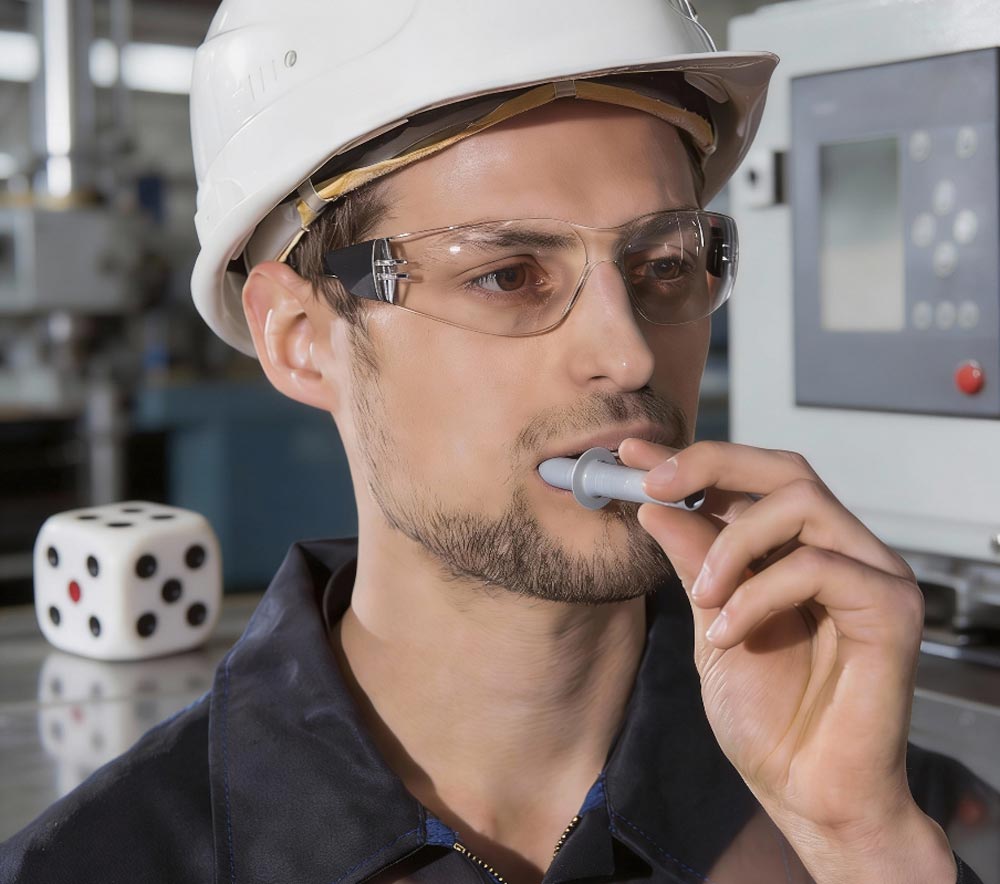
There are several methods of workplace drug testing, including pre-employment, under suspicion and post-incident. However, perhaps the most effective – and in some circles controversial – is random workplace drug testing.
This method of testing helps reduce risk, prevent incidents, and supports a culture of accountability. Yet many employers and employees still misunderstand how random workplace drug testing works and why it matters.
Is random workplace drug testing controversial?
We mentioned that random workplace drug testing can be controversial. Some people think it’s unfair. Others think it is guesswork or poorly organised. Some think it targets particular people within a workplace.
In reality, a well-designed random workplace drug testing program is none of these. It’s structured, transparent, and evidence based.
This guide explains everything you need to know about random workplace drug testing. It covers how it works, why businesses use it, what employees should expect, and how employers can implement a compliant and effective program.
In short, this blog is a complete guide to getting random workplace drug testing right and removing any controversy.
What Is Random Workplace Drug Testing?
Like you’d perhaps expect, random workplace drug testing is simply a method where employees are selected at random for drug testing. Every eligible employee has the same chance of being chosen each time testing occurs.
Selection does not depend on behaviour, performance, or suspicion. It relies on chance, usually through approved software or a documented random selection process.
Random workplace drug testing is different from other testing types, such as:
- Pre-employment testing, which occurs before hiring
- Post-incident testing, which follows a workplace incident
- Under suspicion testing, which occurs when impairment is suspected
Each testing type plays a role in workplace safety. Random testing is unique because it acts as a strong deterrent. Employees cannot predict when testing will occur. It can also help to uncover issues that employers aren’t aware of.
Why Businesses Use Random Workplace Drug Testing
Safety-focused organisations use random workplace drug testing for several key reasons.
- Random testing discourages employees from attending work under the influence of drugs or alcohol. When people know testing can occur at any time, risky behaviour decreases. This matters in safety-sensitive industries such as construction, transport, mining, manufacturing, and logistics, where one impaired decision can cause serious injury or worse.
- Because selection is random, no individual or group is singled out. Everyone covered by the program faces the same probability of selection. This helps reduce claims of bias or discrimination and supports a fair workplace culture.
- Many industries operate under safety regulations or contractual requirements. Random workplace drug testing supports compliance with internal policies, client expectations, and industry standards.
- Drug and alcohol impairment affects reaction time, judgment, coordination, and concentration. Random testing helps protect not only workers, but also customers, contractors, and the wider community.
What Makes Random Testing Truly Random?
To be most effective, random workplace drug testing must be genuinely random. This means no patterns, no predictability, and no manual manipulation.
A proper program ensures:
- Every eligible employee has an equal chance of selection
- Testing occurs across different days and times
- Different shifts and crews are included
- All work locations are covered
- Off-site and mobile workers are included where practical
If testing always happens on the same day or at the same site, employees will notice. Predictable testing loses its deterrent effect.
Why Some Employees Get Tested More Often Than Others
This is one of the most common concerns about random workplace drug testing. However, true randomness means some employees may be tested more than others over time and doesn’t mean the process is unfair. It reflects how probability works.
Think of a coin toss. Each toss has a 50 per cent chance of heads. You can still get heads several times in a row. The process remains random. The same applies to rolls of the dice.
And it applies to random workplace drug testing. An employee may be selected twice in a short period, while another may not be selected for some time. Over a long period, selection balances out across the workforce.
This is why education is critical. When employees understand how randomness works, concerns reduce.
Is Random Workplace Drug Testing Legal?
Yes, random workplace drug testing is legal in Australia when implemented correctly. However, it must meet several key principles.
- Testing must be supported by a clear drug and alcohol policy that outlines why testing occurs, who may be tested, what substances are tested, how results are managed, and what happens after a positive result. Employees should receive this policy and acknowledge it.
- Testing should align with the level of risk in the workplace. High-risk roles justify testing; low-risk roles often don’t.
- Selection must be genuinely random. Employers must be able to demonstrate this if questioned.
- Testing must be conducted professionally and confidentially. Results must be handled securely.
What Substances Are Tested in Random Workplace Drug Testing?
The substances tested depend on the workplace policy and industry requirements.
Most random workplace drug testing programs include drugs such as cannabis (THC), methamphetamines, amphetamines, cocaine, opiates, and oxycodone.
Alcohol testing is often included alongside drug testing. Some workplaces also test for additional substances based on risk assessment.
How Random Workplace Drug Testing Is Conducted
Testing occurs during work hours. Trained collectors attend the site or meet off-site workers.
The process typically involves:
- Verification of employee identity
- Explanation of the testing process
- Sample collection using approved methods
- Secure handling of samples
- Laboratory analysis for non-negative results
- Confidential reporting of results
Collection methods may include urine, oral fluid, or breath testing for alcohol. Professional providers follow strict chain-of-custody procedures to protect accuracy and integrity.
What Happens If an Employee Returns a Positive Result?
For a start, an on-site drug test isn’t positive. In the industry, it’s called a non-negative. That’s because the test must be confirmed by testing in an approved laboratory. When an employee provides a non-negative result, they will be taken to a safe place to ensure they aren’t a danger to themselves or others.
Once a positive result is confirmed, which can take a few days, it does not automatically mean termination. The response depends on the workplace policy and circumstances. Often support and education pathways are called for, alongside disciplinary action where appropriate.
Best-practice programs focus on safety and risk management, not punishment alone.
Employee Rights and Responsibilities
Employees have rights during random workplace drug testing. They have the right to:
- Understand the policy
- Be treated respectfully
- Have their privacy protected
- Challenge results through proper processes
They also have a right to refuse random workplace drug testing, although as we’ve highlighted before in our blogs, this is rarely a sensible approach.
Employees also have responsibilities. They must:
- Comply with lawful testing requirements
- Attend work fit for duty
- Disclose prescribed medications when required
Clear communication supports trust on both sides.
How Often Should Random Workplace Drug Testing Occur?
There is no one-size-fits-all answer. Frequency depends on:
- Industry risk level
- Workforce size
- Regulatory obligations
- Past incident history
High-risk workplaces often conduct more frequent testing. Lower-risk environments may test less often. The key is consistency and unpredictability.
The Importance of Education and Communication
Random workplace drug testing works best when supported by education. Employees should understand:
- Why testing occurs
- How randomness works
- What substances are tested
- What support is available
Education reduces fear, misinformation, and resistance. It also strengthens safety culture.
How Integrity Sampling Supports Random Workplace Drug Testing
Integrity Sampling helps businesses effectively design, implement, and manage effective random workplace drug testing programs. We support organisations across Australia with:
- Policy development and review
- Truly random selection systems
- On-site and off-site testing
- Employee education
- Compliance support
- Ongoing program management
Our approach focuses on fairness, safety, and professionalism.
If your organisation wants to improve safety through random workplace drug testing, Integrity Sampling can help.
FEATURED IMAGE CAPTION:
Every wondered how random workplace drug testing works? Our new blog explains everything you need to know and why random testing matters.


