
It’s winter and often that means every second person (and their dog) has a cough, cold or flu. It’s also the time of year when sales of cough medicines soar. That begs the question: if you’ve recently taken cough medicine and are asked to complete an alcohol test, could your medicine cause you to fail?
The short answer is no in almost all circumstances, although there are some important qualifications.
While some over the counter and prescription cough medicines contain alcohol, professional alcohol testing – on the roads and in workplaces – is designed to distinguish between temporary mouth alcohol and genuine alcohol consumption. In the unlikely event that residual alcohol from cough medicine affects an initial screening result, confirmation testing conducted a short time later should return a zero reading once the residual alcohol has cleared.
Cough medicines may contain alcohol
Many over the counter and prescription cough medicines do contain small amounts of alcohol. Manufacturers may use alcohol as a solvent or preservative in some liquid formulations.
Other products may contain:
- codeine, which is an opiate found in some prescription cough medicines
- dextromethorphan, a cough suppressant that is chemically related to opioids but is not an opioid itself
- antihistamines
- decongestants
The presence of alcohol in cough medicine often causes the most concern. Fortunately, the amount is generally very small when the medicine is taken according to the directions (and even when not – see below).
Why an initial breath alcohol test may show a reading
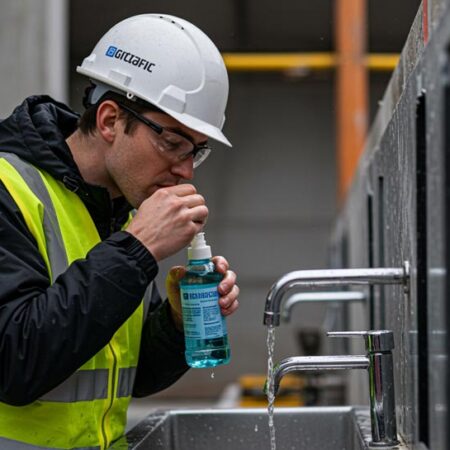
Immediately after swallowing cough medicine, a small amount of alcohol can remain in your mouth. This is known as mouth alcohol.
A breathalyser measures alcohol in the air you exhale. If alcohol remains in your mouth, it may briefly influence an initial screening result.
This effect is temporary and does not reflect your actual blood alcohol concentration.
The residual alcohol usually disappears within a few minutes.
It’s one of the reasons why professional workplace and roadside alcohol testing programs don’t test the initial result as the final result. Instead, if an initial screening test detects alcohol, a confirmation test is conducted after a waiting period. This allows any residual mouth alcohol to dissipate.
If the original reading was caused only by cough medicine remaining in the mouth, the confirmation test should return a zero reading.
This is one reason why confirmation testing is an essential part of quality workplace and roadside alcohol testing programs.
Can cough medicine really cause a positive alcohol test?
The upshot of this is that if you’re blaming cough medicine on a positive alcohol test, your medicine alone will not explain the result.
Canadian Medical Review Officer Dr Melissa Snider-Adler covered this issue in a recent LinkedIn post. She noted that it’s not unusual in her experience for an employee to explain a positive result by saying they only took cough syrup.
However, she says the numbers rarely support that explanation.
According to Dr Snider-Adler, “A standard drink of alcohol contains about 13,450 mg of alcohol. A 10 mL dose of cough syrup with 10% alcohol contains roughly 789 mg of alcohol. That is less than 6% of one standard drink.
“Even at twice the recommended dose, it is still under 12% of a standard drink. And if it was taken hours before the test, it does not explain a confirmed positive breath alcohol result.”
She also added in the post the importance of screening (the initial test) and confirmation testing. For her, a positive screen that clears on confirmation may suggest mouth alcohol. That is why there is a wait period before the confirmation test.
What should you do before a workplace alcohol test?
If you have recently taken cough medicine and are about to undergo alcohol testing, there are several simple steps you can take.
- Tell the tester that you have recently taken cough medicine.
- If possible, rinse your mouth with water before the test.
- Follow any instructions provided by the tester.
- Never attempt to hide medication use.
Providing this information helps the tester correctly interpret any initial screening result. It also demonstrates openness and supports a fair testing process.
Can cough medicine affect a workplace drug test?
As highlighted above, some prescription cough medicines contain codeine, while others contain dextromethorphan.
Therefore, if you are taking prescription medication that can cause a non-negative result, including cough medicine, it is recommended to disclose this to your supervisor when you start taking the medication. You can also disclose it during the testing process.
Where laboratory confirmation and Medical Review Officer (MRO) review form part of the testing program, legitimate prescription medicines can usually be appropriately assessed before a final result is reported.
Employees should never stop taking prescribed medication without medical advice. But disclosing it to their employers makes sense.
Frequently asked questions
Can cough syrup cause a false positive alcohol test?
Some alcohol-containing cough syrups may briefly affect an initial breath alcohol screening if residual alcohol remains in the mouth. However, confirmation testing conducted after a waiting period should eliminate this temporary effect.
Should I tell the tester I’ve taken cough medicine?
Yes. If you’ve recently taken cough medicine, let the tester know before the test. This helps ensure the result is interpreted correctly if an initial screening detects alcohol.
How long should you wait after taking cough medicine before an alcohol test?
If you’ve just taken cough medicine, tell the tester beforehand and, if possible, rinse your mouth with water. Professional alcohol testing includes confirmation testing after a waiting period to eliminate any temporary effects of residual mouth alcohol.
The bottom line
When taken as directed, cough medicine is very unlikely to cause someone to fail a properly conducted workplace alcohol test.
In rare situations, an alcohol-containing cough medicine may briefly influence an initial screening result because of residual mouth alcohol. However, professional workplace alcohol testing includes confirmation testing specifically to identify and eliminate these temporary effects.
If you have recently taken cough medicine, simply let the tester know beforehand and, where practical, rinse your mouth with water before providing your breath sample.
High-quality workplace drug and alcohol testing programs are designed to distinguish between genuine alcohol consumption and temporary mouth alcohol contamination. That’s one reason why using trained collectors, quality equipment and confirmation procedures is so important for employers.
FEATURED IMAGE CAPTION:
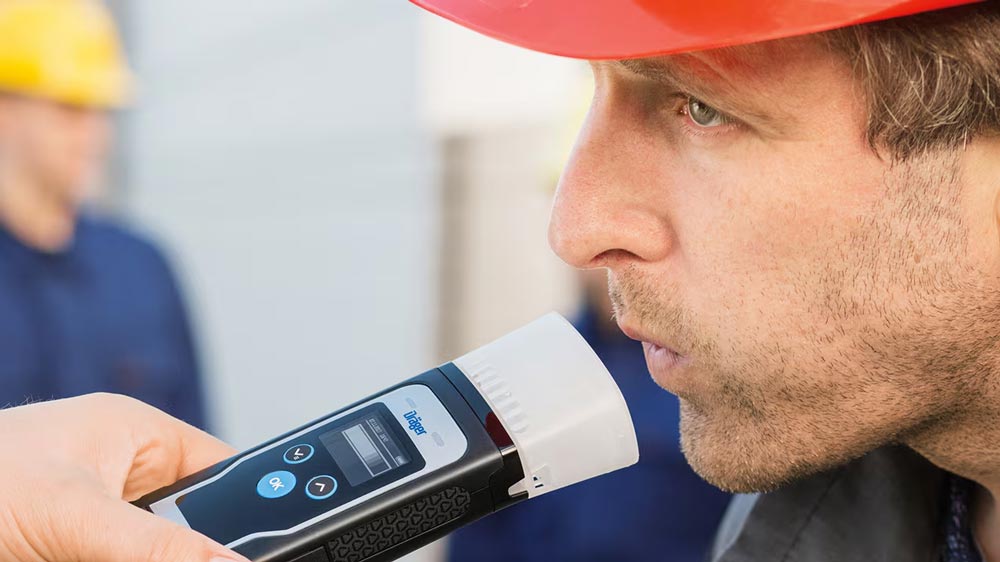
A worker undergoes alcohol testing in a workplace. Could cough medicine alcohol testing lead to a result above 0.0?