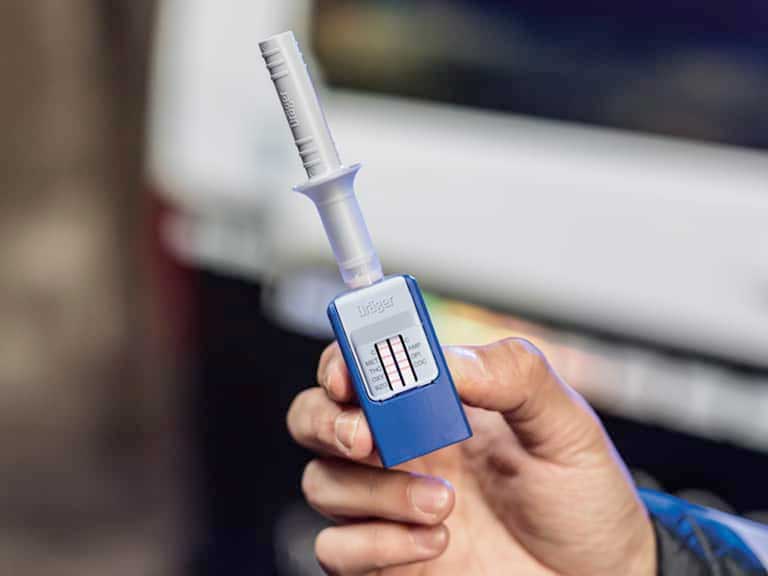

If you’ve taken drugs recently and are asked to undertake a drug test—whether by police on the roadside or by your employer—it might be tempting to refuse. But as we’ve seen time and time again, refusing is not the answer. In fact, it can create even bigger problems.
A recent Victorian court case shows why. Refusing a lawful drug test can result in serious legal consequences. In the workplace, there are also likely to be serious consequences. In some cases, they may be more severe than if you’d simply taken the test and failed.
A recent case highlights the risks of refusing drug testing in Victoria
A case of a woman from Wodonga appeared before the courts recently after she refused to undergo roadside drug testing.
Police had stopped her for a random roadside test. Although her driving did not initially raise concerns, officers later observed signs that suggested she was affected by a substance.
She completed a preliminary breath test, which returned a negative result for alcohol. However, she refused to provide samples for drug testing.
Under Victorian legislation, the matter then proceeded to court, where guilty pleas had already been entered for driving under the influence of drugs and refusing to undergo testing. The matter recently came before the court, where the charges were adjourned until later this month.
The case is another reminder that refusing a drug test does not make the situation disappear. Instead, it often results in more significant consequences.
In this instance, if it was a first offence, it’s likely she would have been facing a fine of three penalty units and a six-month licence suspension. Instead, because she refused testing, her matter was sent to court and she now likely faces a fine of 12 penalty units (around $2500) and a 2-year licence disqualification.
Refusing a roadside drug test can have serious consequences
Let’s be clear, the Victorian police have the power to require drivers to undergo roadside drug testing. That doesn’t mean they can physically force you to undergo testing, but they do have the legal authority to require it.
If a driver refuses without a lawful excuse, they may face significant penalties. These can include:
- Criminal charges
- Fines
- Licence disqualification
- A court appearance
- A criminal record in some circumstances
Essentially, refusing a test does not prevent police from investigating suspected drug impairment. Instead, it may result in additional offences being laid.
The same principle can apply in the workplace
What about in a Victorian workplace? Can refusing workplace drug and alcohol testing carry more serious consequences than failing a test?
The answer, unfortunately, is not as clear. That’s because each workplace will have its own policy and essentially its own set of rules.
What we can say is that employers in safety-sensitive industries do have a legal obligation to provide a safe workplace. Therefore, in industries such as construction, transport, manufacturing, mining and logistics, employers often have the right to carry out drug and alcohol testing.
If an employee refuses to participate in testing required under a workplace policy, the employer may treat the refusal as a breach of that policy. Importantly, the workplace policy should clearly explain testing refusal and the consequences. If refusal isn’t covered, it provides an employee who has suffered consequences for refusing testing with potential grounds to contest the case.
Depending on the circumstances, the consequences may include:
- A formal investigation
- Disciplinary action
- Termination of employment
Every workplace policy is different, but refusing a test is rarely viewed more favourably than cooperating with the process, even if you ultimately fail the test.
Prevention is always the better option
The simplest way to avoid problems is to ensure you are fit for duty before getting behind the wheel or attending work.
That means:
- Never drive while affected by drugs or alcohol.
- Understand how prescription medications may affect your ability to drive or work safely.
- Speak with your doctor or pharmacist if you are unsure about medication side effects.
- Follow your workplace drug and alcohol policy.
- Cooperate with lawful testing when required.
A proactive approach protects your safety, your employment and the safety of everyone around you.
Integrity Sampling provides workplace drug testing across Victoria
Integrity Sampling helps Victorian businesses create safer workplaces through professional workplace drug and alcohol testing services.
Our experienced technicians provide reliable testing services for businesses of all sizes, helping employers meet their safety obligations while treating employees with professionalism and respect.
With a local presence in Wodonga, we support businesses throughout regional and metropolitan Victoria with workplace drug and alcohol testing, policy implementation and ongoing compliance support.
To learn more about our workplace drug and alcohol testing services across Victoria, or to speak with our local Wodonga team, visit our Victorian services page.
FEATURED IMAGE CAPTION:
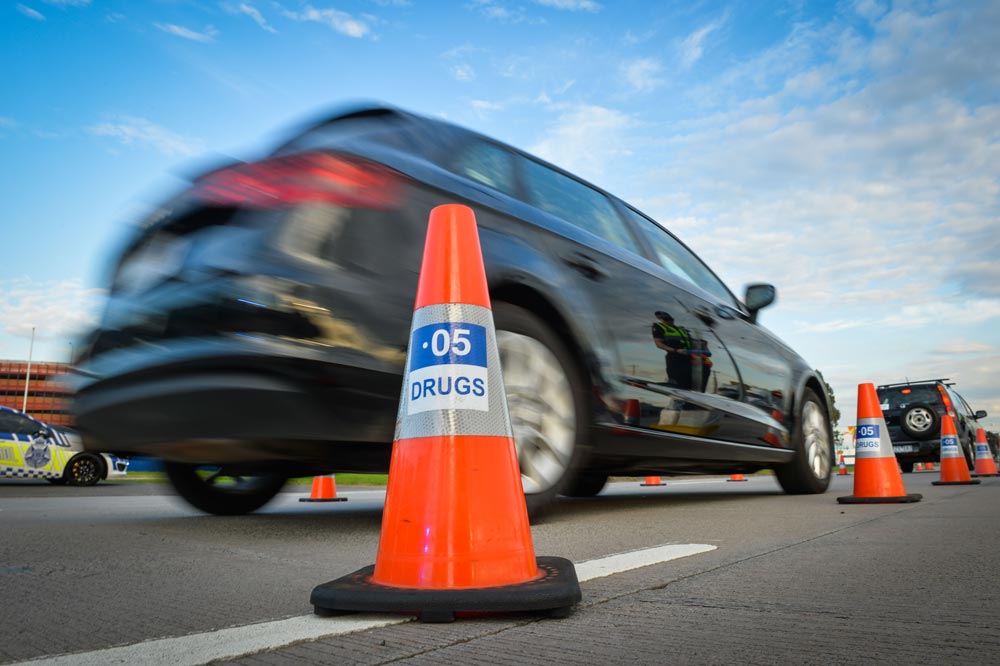
Refusing a roadside drug test in Victoria may seem a good idea at the time, but it rarely is. Credit Transport Accident Commission.