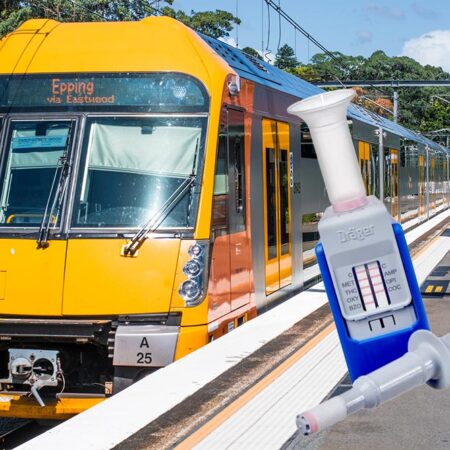


A cocaine addicted train driver has received compensation from his employer even after he admitted he was using cocaine while employed by Queensland Rail. How it happened provides valuable lessons about workplace drug testing and managing drugs and alcohol fairly.
The case, reported by The Courier Mail, centres on a Queensland Rail driver who admitted to heavy cocaine use while employed. He was later dismissed following criminal convictions related to drug possession and assault. However, the dismissal was overturned by the Fair Work Commission.
While on the surface the overturning of the dismissal may seem incorrect. But when you read the details, it makes sense. Importantly, the outcome provides important learnings about workplace drug testing in Queensland, workplace policies, and how employers manage safety-sensitive roles.
What happened in the Queensland Rail case
The driver, who reportedly had a significant cocaine habit, was arrested after an off-duty incident. Police later found a significant quantity of cocaine at his home. He pleaded guilty and was sentenced, although he was released on immediate parole.
Queensland Rail dismissed the driver, citing safety concerns. Given the nature of his role, this response may seem reasonable. However, the Fair Work Commission (FWC) found the dismissal to be “harsh and unreasonable.”
Why?
Because there was no evidence the employee was ever impaired at work. He had passed all workplace drug testing at Queensland Rail. There was also no proof that he had driven trains under the influence.
Which is why the FWC found in favour of the train driver.
Workplace drug testing in Queensland doesn’t go beyond the gates
One of the most striking aspects of this case is that the employee passed all random drug and alcohol tests conducted by Queensland Rail. Luck or good management? We’ll never know.
However, the fact is that there was no evidence and no workplace drug testing results that could back up a reason to dismiss the driver. What an employee does in his or her own time is their business. All they need to do is present to work in a safe condition.
What the case doesn’t mean is that workplace drug testing is ineffective. It means testing alone is not enough.
Effective workplace drug testing in Queensland must be part of a broader system that includes:
- Clear workplace policies
- Education for employees and managers
- Defined procedures for managing risk
- Fair and consistent decision-making
Why policy matters as much as testing
The Fair Work Commission made it clear that employees have a right to a private life. Employers cannot act based solely on behaviour outside of work unless it impacts the job or workplace.
In this case, the employer could not prove that the employee’s drug use affected his performance or safety at work.
This is a critical lesson.
A workplace drug and alcohol policy must clearly outline:
- Expectations around fitness for work
- What constitutes impairment
- When testing will occur
- How results are managed
- What happens after a positive result
Without these elements, employers may struggle to justify disciplinary action, even in high-risk roles like train driving.
Managing safety-sensitive roles in Queensland
Roles such as train drivers, transport operators and heavy machinery workers carry significant safety risks. In these industries, the margin for error is small.
However, this case shows that even in safety-critical roles, employers must follow fair and lawful processes.
A strong approach to drug testing in Queensland should include:
- Risk-based testing programs
- Post-incident testing procedures
- Clear return-to-work protocols
- Access to rehabilitation and support services
Importantly, employers must document everything. Decisions should be based on evidence, not assumptions.
How Integrity Sampling can help
At Integrity Sampling, we help businesses across Queensland build robust and compliant drug and alcohol management systems.
Our services go beyond testing. We support employers with:
- Policy development and review
- Workplace education and training
- Drug and alcohol testing programs
- Guidance on managing positive results
We understand the complexities of drug testing in Queensland and help businesses reduce risk while staying compliant with workplace laws.
Contact us today to see how we can help your business.
FEATURED IMAGE CAPTION:
A Fair Work Commission case involving a train driver highlights why drug testing in Queensland must be fair, consistent and backed by strong workplace policies. Credit john skewes https://www.flickr.com/photos/johnske/9588057618/