

The Australian drug landscape is shifting rapidly in 2026. While many people focus on well-known substances, such as cannabis, cocaine, and methamphetamines, there’s another dangerous threat in Australia.
Nitazenes are a group of synthetic opioids that are now appearing across the country. These chemicals are not new to science, but their presence in the illicit market is a major concern for public health and safety.
Understanding the danger of nitazenes
To understand the danger of nitazenes, it’s worth looking at how they were developed.
Nitazenes were first developed in the 1950s as a potential pain medication, by researchers at a Swiss chemical company. As a pain medication they showed a lot of promise. However, they were never approved for medical use.
Why? Simply because they were too powerful and dangerous for humans.
So powerful that they are up to 1000 more potent than morphine. So powerful that they’re up to 100 or 500 times more potent than heroin. Nitazenes are generally even more powerful than fentanyl. While fentanyl has been approved for medical use, illegally made and illicit use of the drug is common and, like nitazenes, a great concern.
With this type of potency, why would people ingest nitazenes? When even a tiny amount can cause a life-threatening overdose, why would people risk it?
Sadly, many people don’t even know they’re taking them!
Why nitazenes are a hidden danger
The biggest risk of nitazenes is that users often do not know they are taking them. They are frequently mixed into other drugs because of their potency, inexpensive production costs, and ease of transportation. Recent reports from NSW Health show that nitazenes have been found in:
- Counterfeit “M30” or oxycodone tablets.
- Illicit vape liquids and e-cigarettes.
- Supplies of cocaine, MDMA, and methamphetamine.
- Heroin
A small study by the Emergency Drugs Network of Australia (EDNA) into emergency department nitazene-related presentations found that only 16 per cent of presentations knowingly ingested a nitazene. Many thought they were taking an alternative opioid.
This “unintentional exposure” is a leading cause of the spike in emergency department visits in early 2026.
The impact on workplace safety
For industries like mining, construction, and transport, the presence of nitazenes changes the safety equation. A worker might consume a substance over the weekend that they believe is a low-risk stimulant. If that substance is laced with nitazenes, the “hangover” is not just fatigue. It can be a severe central nervous system depression.
Nitazenes can stay in the system longer than other opioids. This creates a “lag effect” where coordination and reaction times remain impaired long after the initial use.
How workplace can stay safe and prepared
To combat the rising threat of synthetic opioids such as nitazenes, businesses must move from a reactive to a proactive stance. Here is how you can protect your workplace:
- Conduct targeted workplace drug testing: Ensure your testing programs can detect nitazenes and other opioids. Regular screening identifies individuals under the influence before they cause a serious accident or injury on-site.
- Educate your workforce: Knowledge is a powerful preventative tool. Provide education to your employees about the emergence of nitazenes. When employees understand that “standard” illicit drugs are now being laced with deadly synthetics, they are more likely to recognise the extreme personal and professional risks involved.
- Update your drug and alcohol policy: Ensure your formal policy is not stuck in the past. It must include specific provisions for emerging synthetic substances. A robust policy gives management the clear authority to test for and manage the risks associated with new chemical threats as they appear in the market.
- Trust the Data: Keep an eye on public health alerts. Organisations like the Alcohol and Drug Foundation (ADF) and pill testing services provide regular updates on what is circulating in the community.
FEATURED IMAGE CAPTION:
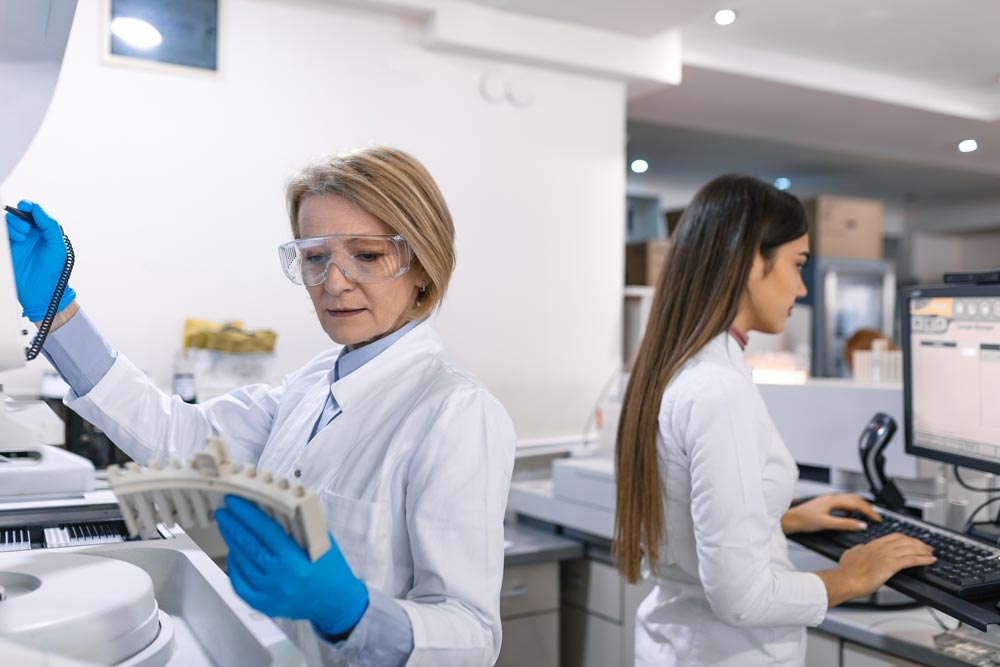
Laboratory technicians conduct testing in a lab. More frequently, nitazenes are being detected in workplace drug testing.