
When an emergency happens, we rely on police officers, paramedics, firefighters and defence personnel to respond quickly, professionally and safely. Whether attending a serious road crash, responding to a fire, administering life-saving treatment or protecting national security, these professionals perform some of the most demanding jobs in Australia.
Given the critical nature of their work, it is reasonable to ask: do emergency services personnel undergo drug testing?
The answer is yes. Across Australia, most police, ambulance, fire and defence organisations maintain drug and alcohol policies that include some form of testing. While the details vary between agencies and jurisdictions, the goal is the same: ensuring personnel are fit for duty and capable of performing their roles safely.
Similar requirements exist in many other countries, as a recent case from the United Kingdom has highlighted.
A recent UK police case highlights the importance of drug testing
In September 2026, a volunteer police officer in the United Kingdom was dismissed following a disciplinary hearing after a drug test detected cocaine and one of its metabolites in his system.
According to media reports, the officer denied ever taking cocaine and argued that his work regularly brought him into contact with drug users and dealers. However, evidence presented by an independent toxicologist suggested that ingestion was a more likely explanation than environmental exposure.
The disciplinary panel ultimately found that the officer had breached professional standards and dismissed him from the special constabulary.
While this case occurred in the UK and not Australia, it demonstrates the importance placed on fitness for duty within law enforcement agencies around the world. It also highlights the role laboratory confirmation and toxicological interpretation play in drug testing programs, particularly when positive results are challenged.
Do emergency services undergo drug testing in Australia?
As we've already highlighted, the short answer is yes.
Across Australia, police services, ambulance organisations, fire and rescue agencies, and the Australian Defence Force all maintain policies relating to alcohol, drugs and fitness for work.
The exact testing requirements vary between jurisdictions and employers, however emergency services personnel commonly face:
- Pre-employment drug and alcohol testing
- Random testing
- Targeted or reasonable-cause testing
- Post-incident testing
- Return-to-duty testing
- Follow-up testing where concerns have been identified
The reason is simple. These are safety-sensitive roles where impairment can have significant consequences for workers, colleagues and members of the public.
Police drug testing across Australia
Australian police officers operate in one of the country's most safety-sensitive professions. They drive emergency vehicles, carry firearms, exercise significant powers and often make life-or-death decisions.
As a result, police agencies across Australia maintain drug and alcohol policies designed to ensure officers remain fit for duty.
Examples include:
- NSW Police Force, where officers may be subject to random, targeted, mandatory, recall-to-duty and follow-up drug and alcohol testing.
- Western Australia Police Force, which maintains random, mandatory and targeted testing programs.
- Australian Federal Police, whose professional standards and fitness-for-duty requirements include measures relating to alcohol and other drugs.
- Police agencies in other Australian jurisdictions also maintain alcohol and other drug policies, with testing arrangements varying between agencies.
Drug testing for ambulance officers and paramedics
Paramedics and ambulance officers regularly work in unpredictable environments where split-second decisions can affect patient outcomes. Maintaining fitness for duty is essential. They may be required to administer medications, provide emergency medical treatment and drive under emergency conditions where safety is paramount.
Ambulance services across Australia operate under drug and alcohol policies designed to support fitness for work, patient safety and public confidence. Like the police, testing requirements vary between jurisdictions and employers.
Examples may include:
- Pre-employment medical assessments and drug or alcohol screening.
- Drug and alcohol testing following critical incidents.
- Testing where there is reasonable suspicion that a worker may be impaired.
- Random testing programs in some jurisdictions.
- Medication accountability and compliance programs.
Firefighters and fire and rescue personnel
Firefighters perform physically demanding work in hazardous conditions and are frequently required to make rapid decisions under pressure.
Across Australia, fire and rescue agencies commonly require:
- Pre-employment drug and alcohol screening
- Fitness-for-work assessments
- Random testing programs in some jurisdictions
- Post-incident testing where appropriate
Whether responding to house fires, industrial incidents, vehicle rescues or natural disasters, firefighters must be alert and capable of safely operating specialised equipment and emergency vehicles.
Australian Defence Force drug testing
The Australian Defence Force (ADF) maintains strict standards regarding drug and alcohol use.
ADF personnel may be subject to:
- Random drug testing
- Targeted testing
- Testing following specific incidents
- Comprehensive fitness-for-duty requirements
The ADF has long maintained a zero-tolerance approach to illicit drugs due to the significant operational and safety risks associated with military service. Defence personnel may be required to operate sophisticated equipment, weapons systems, aircraft, naval vessels and military vehicles where impairment could have serious consequences.
Why emergency services drug testing is different
Many Australian workplaces conduct drug and alcohol testing. However, emergency services personnel occupy a unique position. Safety remains the primary concern, but public trust and accountability are also critical.
The community places enormous responsibility in the hands of police officers, paramedics, firefighters and defence personnel. Maintaining confidence in these institutions requires high professional standards and clear accountability.
Incidents involving drugs or alcohol can undermine public confidence, which is one reason why emergency service organisations continue to invest in comprehensive fitness-for-duty programs.
The recent UK police case serves as a reminder that public expectations around safety, accountability and professionalism are not unique to Australia.
What about politicians?
Any discussion about drug testing of emergency services often extends to politicians. While politicians do not generally perform safety-critical operational roles, they make decisions that can affect millions of Australians.
While some local government organisations have implemented drug and alcohol testing programs, testing of state, territory and federal politicians is generally not conducted.
Prime Minister Anthony Albanese has previously argued that elected officials are ultimately accountable to voters through the democratic process rather than workplace testing programs.
Whether the public agrees with that position remains a topic of ongoing debate.
Final thoughts
Drug testing of emergency services personnel is now an established part of maintaining safety, accountability and fitness for duty across Australia.
While policies differ between police agencies, ambulance services, fire authorities and the Australian Defence Force, the objective remains the same: ensuring the people responsible for protecting our communities are capable of performing their duties safely and effectively.
The recent UK police dismissal may have occurred thousands of kilometres away, but it reinforces a universal principle. When lives, public safety and community trust are at stake, fitness for duty matters.
Frequently asked questions
Do police officers undergo random drug testing in Australia?
Many Australian police agencies conduct random drug testing, along with targeted and post-incident testing. Specific requirements vary between jurisdictions.
Are paramedics drug tested?
Yes. Ambulance services typically maintain drug and alcohol policies that may include pre-employment screening, reasonable-cause testing and post-incident testing. Requirements vary between jurisdictions.
Do firefighters undergo drug testing?
Many Australian fire and rescue agencies conduct pre-employment drug testing and maintain fitness-for-duty policies. Requirements vary between jurisdictions.
Does the Australian Defence Force conduct random drug testing?
Yes. ADF personnel may be subject to random and targeted drug testing as part of the Defence Force's fitness-for-duty requirements.
Originally published June 24, 2024. Updated November 23, 2026
FEATURED IMAGE CAPTION:
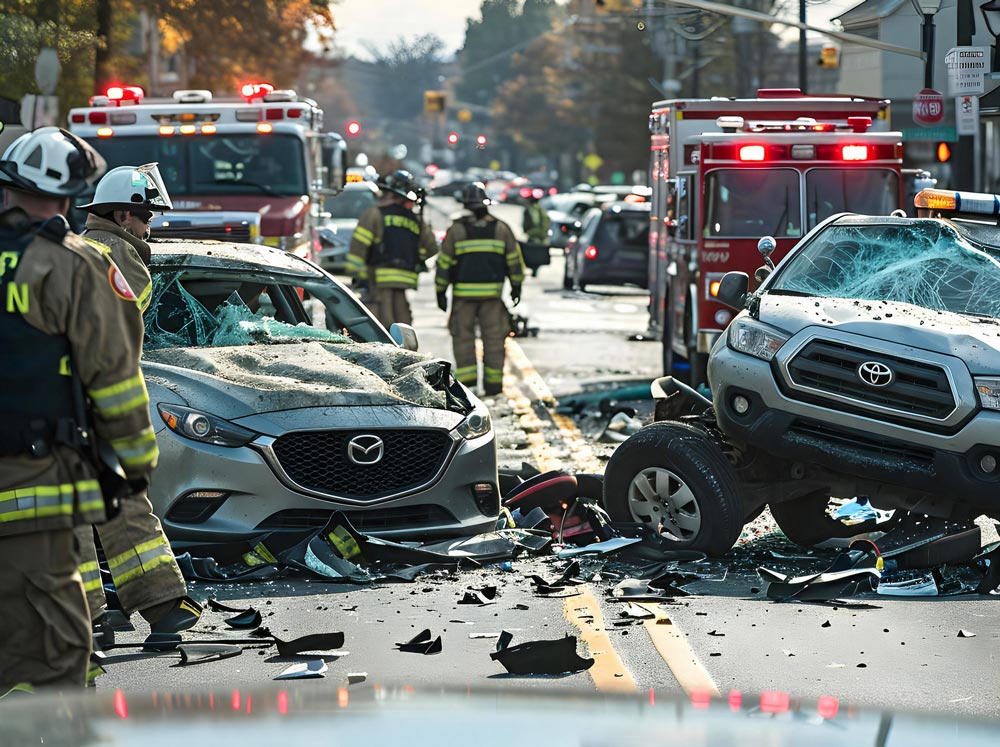
Firefighters and other emergency personnel at the scene of a serious car accident. They’re in the line of duty, protecting Australians, so should police, ambulance, fire fighters and defence personnel face drug testing?