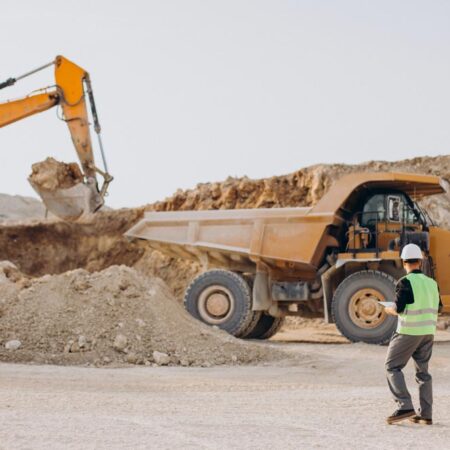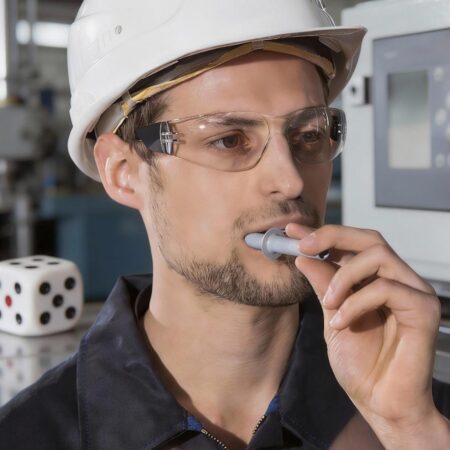


While drug and alcohol testing on Australian construction sites is commonplace, there is one aspect of the industry that sets it apart from many other workplaces. An aspect that creates unique challenges for testing and for drug and alcohol management.
What is it?
On a typical major construction project, the workforce is rarely employed by a single organisation. Instead, a site may bring together dozens of contractors, subcontractors, labour hire providers, specialist trades, and service providers, all operating under the same safety requirements.
This creates a unique challenge when it comes to construction drug and alcohol testing. How do project owners and principal contractors ensure consistent standards across a workforce made up of multiple employers?
Let's take a closer look.
Why construction sites are different
Many workplaces, such as factories, warehouses, council depots, and corporate offices, are largely made up of employees working for a single organisation. While contractors may be present, one employer is typically responsible for managing most workers on site.
Construction projects often operate very differently.
A major infrastructure project may involve:
- A principal contractor
- Multiple subcontractors
- Labour hire workers
- Civil construction crews
- Electrical contractors
- Traffic management teams
- Plant operators
- Surveyors
- Other specialist service providers
As projects progress, contractors may join and leave the site, workers may move between projects, and different organisations may bring their own policies, procedures, and approaches to drug and alcohol management.
As a result, maintaining consistent compliance standards across the entire project can become a significant challenge.
This is one reason why construction drug and alcohol testing has evolved beyond simply conducting tests. Principal contractors increasingly want confidence that every company working on the project is managing impairment risks in a consistent and defensible way.
Increasingly, contractors that can demonstrate a comprehensive drug and alcohol management program, particularly one that forms part of a broader fitness-for-work framework, are placing themselves in a stronger position when tendering for new work. In a competitive market, robust safety systems can help demonstrate professionalism, maturity, and a commitment to workforce wellbeing.
What contractors are being asked to prove
The expectations on contractors on construction sites continue to grow.
Many project owners and principal contractors are no longer satisfied with simply seeing a drug and alcohol policy. Instead, they want evidence that the policy is being implemented, monitored, and followed across the workforce.
Depending on the project, contractors may be asked to provide:
- A current drug and alcohol policy
- Defined fitness-for-work requirements
- Pre-employment testing procedures
- Random testing protocols
- Post-incident testing processes
- Reasonable suspicion testing procedures
- Records of employee education and awareness programs
- Laboratory confirmation arrangements
- Evidence of ongoing program review
Importantly, the focus is increasingly on consistency.
A contractor may have strong policies on paper, but project owners often want confidence that those policies are being applied in practice and that workers understand their responsibilities.
Why contractor compliance matters
The challenge for principal contractors is not managing a single workforce. It is managing multiple workforces that operate under the same project safety requirements.
If one subcontractor has a robust drug and alcohol program while another has limited controls, the resulting inconsistency can create additional safety risks.
For this reason, many major projects are placing greater emphasis on contractor assurance and compliance verification.
This approach helps:
- Promote consistent safety standards
- Reduce impairment risks across the project
- Strengthen incident prevention efforts
- Improve contractor accountability
- Support workplace health and safety obligations
- Demonstrate due diligence if an incident occurs
Consequently, contractors that can clearly demonstrate compliance are often better positioned during procurement processes, safety audits, and project reviews.
Drug and alcohol testing is only one part of the solution
Construction drug and alcohol testing remains an important workplace safety measure.
However, testing alone cannot eliminate impairment risks.
As a result, drug and alcohol programs are increasingly integrated into broader fitness-for-work frameworks.
These frameworks may include:
- Fatigue management
- Worker wellbeing initiatives
- Supervisor training
- Incident investigation processes
- Mental health support programs
- Critical risk management systems
- Contractor management procedures
The objective is to create an environment where workers are fit to perform their duties safely and where impairment risks can be identified and managed before an incident occurs. Therefore, testing should be viewed as one part of a broader safety strategy rather than a standalone activity.
Common compliance gaps found on construction projects
Even contractors with established programs can encounter challenges when projects review their systems.
Some of the most common gaps include:
- Outdated policies. Policies should be reviewed regularly to ensure they remain aligned with current workplace practices and client expectations.
- Inconsistent testing programs. Testing schedules may lose momentum over time, resulting in irregular or poorly documented activities.
- Insufficient record keeping. When records are difficult to retrieve, organisations may struggle to demonstrate compliance during audits or investigations.
- Limited supervisor training. Supervisors are often responsible for identifying potential impairment concerns. Without appropriate training, issues may be overlooked.
- Unclear escalation procedures. Managers should understand what actions are required following a non-negative result, a workplace incident, or a reasonable cause concern.
Addressing these issues before tendering for major projects can improve both compliance performance and client confidence.
Preparing for future project requirements
As infrastructure and construction activity continues across Australia, there is little sign that contractor compliance expectations will ease. Instead, project owners and principal contractors are placing greater emphasis on evidence, documentation, and accountability.
Construction businesses should regularly review their programs and ask:
- Is our drug and alcohol policy up to date?
- Can we demonstrate how our program operates?
- Are our testing records organised and accessible?
- Do supervisors understand their responsibilities?
- Are contractors and labour hire workers managed consistently?
- Can we provide evidence of compliance if requested?
- Does our testing provider support our compliance objectives?
Taking a proactive approach can help businesses strengthen both safety performance and commercial opportunities.
The future of construction drug and alcohol testing
The future of construction drug and alcohol testing is not simply about conducting tests. It is increasingly about demonstrating that multiple contractors can operate to a consistent standard on the same project.
This is what makes construction different from many other workplaces.
When dozens of businesses share a worksite, project owners need confidence that impairment risks are being managed consistently across the entire workforce, not just within individual companies.
For contractors, that means moving beyond a basic testing program and towards a more comprehensive approach that supports fitness for work, accountability, and ongoing compliance.
Importantly, organisations that can demonstrate a well-managed drug and alcohol program as part of a broader fitness-for-work strategy may gain advantages beyond compliance alone. Strong systems can help build trust with principal contractors, support procurement requirements, and strengthen bids for major construction and infrastructure work.
As expectations continue to evolve, the organisations best placed to win contracts are likely to be those that can show not only that testing occurs, but that drug and alcohol management forms part of a broader, proactive approach to workforce safety and fitness for work.
FEATURED IMAGE CAPTION:
Construction workers attending a workplace drug and alcohol testing compliance briefing on a major infrastructure project.